


In commercial food service environments-from high-volume restaurant kitchens to industrial food processing plants-wiping efficiency directly impacts operational costs and hygiene standards. Procurement managers often face a common headache: low-grade paper towels that tear instantly when wet, leave lint on prep surfaces, or require staff to use double the sheets to clean heavy grease.
To source high-performance kitchen towels that reduce consumption and optimize budget, B2B buyers must evaluate two core manufacturing factors: advanced drying technology and wet-strength formulation.
1. Why TAD (Through-Air-Dried) Technology Outperforms Conventional Paper
Traditional tissue manufacturing relies on wet pressing and Yankee cylinder drying, which flattens the cellulose fibers and reduces sheet bulk. In contrast, Through-Air-Dried (TAD) technology blows hot air directly through the fiber web without mechanical pressing.
3D Fiber Structure: TAD creates a open, porous fiber matrix that increases water and oil absorption capacity by up to twice as much as conventional light-dry crepe (LDC) paper.
Oil-Water Separation: The open pocket structure allows the towel to lock in heavy grease and viscous liquids rather than just smearing them across stainless steel countertops.
Reduced Sheet Usage: Because TAD paper towels absorb significantly more fluid per sheet, food service operators experience up to a 25-30% drop in overall refill frequency, directly lowering per-use expenditure.
2. The Science of Wet Strength: Eco-Friendly Wet-Strength Agents
The ultimate test for commercial paper towels is performance under wet conditions. Standard paper fibers lose over 90% of their tensile strength when saturated. To achieve a true "wet-strength, non-tear" performance, custom tissue manufacturers integrate specialized wet-strength resins into the pulp mixture.
PAE Resins (Polyamide-Epichlorohydrin): These additives cross-link cellulose fibers, creating a permanent water-resistant network that prevents the sheet from shredding during aggressive wiping.
Eco-Friendly & Food-Contact Compliance: Leading OEM paper mills utilize eco-friendly, low-epichlorohydrin wet-strength formulations that comply with FDA and EU food contact regulations (such as BfR XXXVI), ensuring zero chemical contamination when wiping food prep zones or hot cookware.
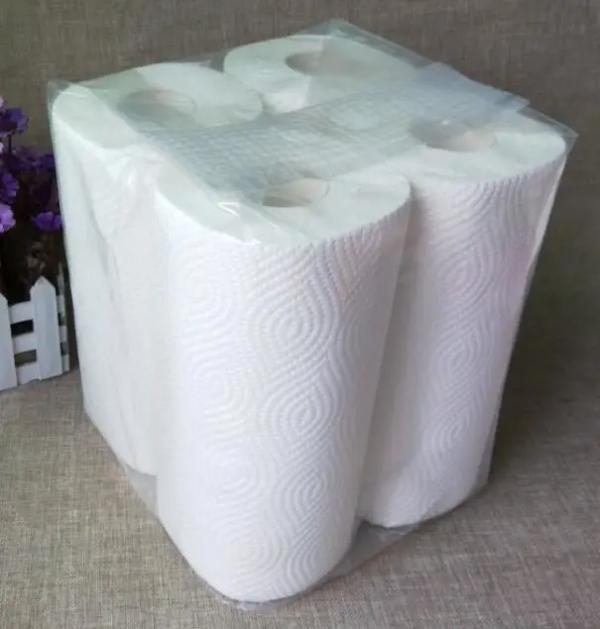
3. Commercial Evaluation Criteria for B2B Wholesale Buyers
When sourcing commercial kitchen paper towels in bulk, procurement teams should request specific technical data sheets (TDS) and factory samples to verify the following performance metrics:
|
Performance Metric |
Commercial Benchmark |
Why It Matters for Food Services |
|
Wet Tensile Strength |
$\ge 20\%$ of Dry Strength |
Prevents tearing when scrubbing tough grease and burnt residues. |
|
Absorbency Rate |
$< 2.0$ seconds |
Fast fluid uptake saves time during peak kitchen rush hours. |
|
Linting Resistance |
Zero visible residue |
Essential for glass, food prep surfaces, and stainless steel maintenance. |
|
GSM Range |
35 – 45 GSM (2-Ply / 3-Ply) |
Balanced basis weight ensures optimal hand-feel and durability. |
Partner with a Direct Paper Towel Manufacturer
Sourcing directly from a high-capacity OEM/ODM tissue factory gives wholesale distributors and commercial foodservice suppliers a competitive edge. Custom options-including embossed patterns, GSM adjustments, sheet counts, and private-label packaging-allow you to meet precise regional market standards.
Looking for reliable commercial paper towels for your distribution network?
Contact our technical sales team today to request free factory samples, detailed specification sheets, or a competitive bulk wholesale quote tailored to your private label requirements.